The stories feature figures that have become emblematic, such as Marie Curie or Hedy Lavelace, whose lives and works in biographies, novels, and essays reveal their struggles, their discoveries, and the way fiction can repair the damage of forgetting.
The stories feature figures that have become emblematic, such as Marie Curie or Hedy Lavelace, whose lives and works in biographies, novels, and essays reveal their struggles, their discoveries, and the way fiction can repair the damage of forgetting.
Works of fiction, for example novels that reinvent the journeys of Ada Lovelace or imagine the intimate thoughts of Marie Curie, offer a sensitive immersion into their daily lives.
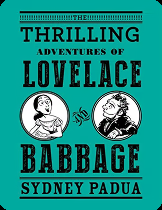
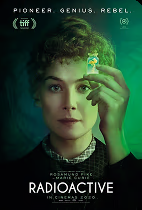
Fiction then plays a critical role: it questions stereotypes, denounces the Matilda Effect – this phenomenon of systematic erasure of women – and offers new models of identification. By giving voice to these forgotten researchers, the narratives rediscover a history of science, showing that great advances are the result of collective work where women have always been present.
Contemporary literature, particularly young adult novels and science fiction, multiplies characters of young girls passionate about computer science or biology. These stories by authors offer positive and credible models that make a scientific career imaginable for everyone. Each work becomes an educational support that raises awareness about issues of equality and diversity in science.
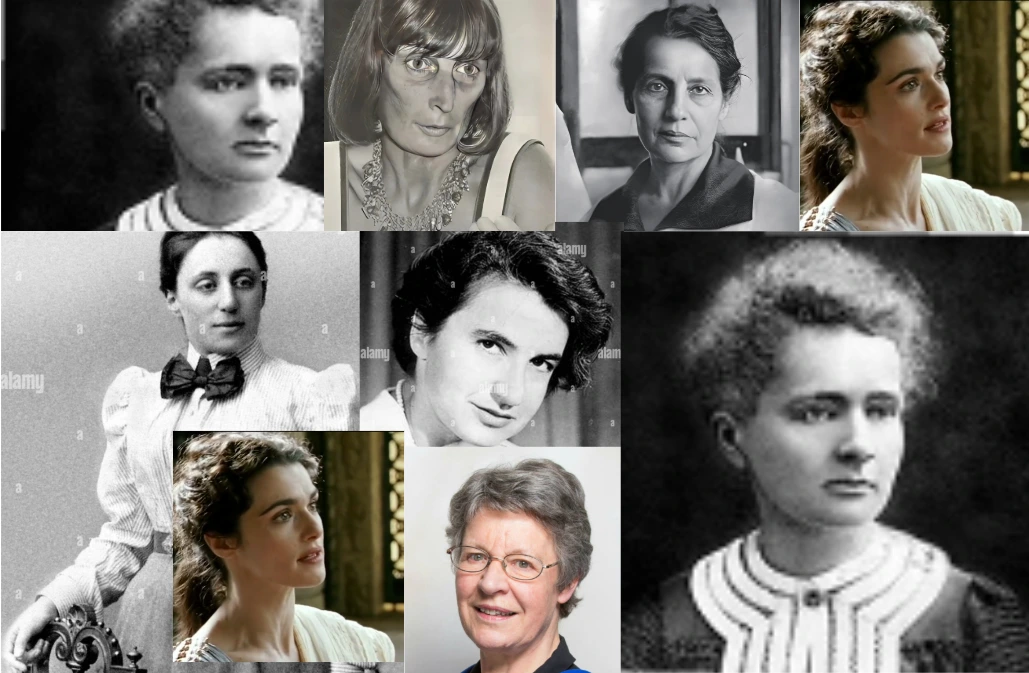
The "Matilda" timeline chronologically illustrates the women scientists who have been made invisible in history, a display called the "Matilda Effect" by historian Margaret Rossiter. This timeline presents a succession of portraits, from the oldest to the most recent, retracing in a few words the discipline, fields, and contribution of each forgotten woman.
Mathematician, Pioneer of Computer Science
1815 - 1852
Imagined the potential of the calculating machine and wrote the first algorithm considered a program.
Physicist, Co-discoverer of Nuclear Fission
1878 - 1968
Interpreted nuclear fission but was excluded from the Nobel Prize awarded to her colleague Otto Hahn.
Biophysicist, Crystallographer, DNA Structure
1920 - 1958
Took X-ray diffraction photographs that reveal the double helix of DNA, a discovery won the Nobel Prize without her knowledge.
Mathematician, Theorist of Symmetries
1884 - 1935
Established a fundamental theorem on symmetries and conservation laws, essential for modern physics.
Pioneer of French Computer Science
1929 - 2021
Directed the development of the COBOL language and contributed to the first French software in artificial intelligence.
Astronomer, Discoverer of Pulsars
1943 - 2023
Identified the first pulsar signals, a discovery awarded the Nobel Prize but attributed to her thesis director.